
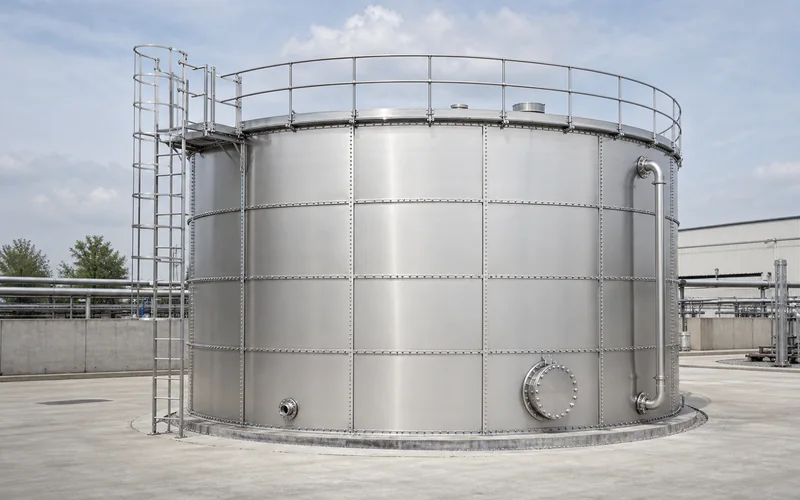
Desalination water storage needs chloride-aware material review
Desalination and high-chloride water projects require more careful material review than ordinary freshwater storage. Chloride level, temperature, pH, dissolved oxygen, cleaning chemicals, and stagnation conditions can affect stainless steel grade selection and corrosion risk.
Stainless steel tanks are often considered where hygiene, corrosion resistance, or treated-water quality are important. Buyers comparing stainless steel bolted tanks should provide water analysis and operating conditions before expecting a reliable recommendation.
This guide expands the original article into a practical RFQ framework for desalination plants, brackish water treatment, high-chloride industrial water, and treated-water storage projects.
Desalination Tank RFQ Data
| RFQ Item | Why It Matters |
|---|---|
| Water chemistry | Chloride, TDS, pH, temperature, dissolved oxygen, residual disinfectant, and cleaning chemicals affect material review. |
| Water stage | Raw seawater, brackish feedwater, permeate, remineralized water, or concentrate have very different corrosion risks. |
| Material grade | The buyer should not assume one stainless grade fits every chloride level or temperature. Grade selection needs project review. |
| Tank accessories | Nozzles, manways, vents, ladders, platforms, drains, level instruments, and sampling points should match operation and inspection needs. |
| Surface and fabrication quality | Weld quality, passivation, cleaning, handling, and contamination control affect stainless performance. |
Do not treat all desalination water as the same
Raw seawater, brackish water, reverse osmosis permeate, remineralized product water, and concentrate are different duties. A tank suitable for treated permeate may not be suitable for raw seawater or concentrate. The RFQ should identify the water stage clearly.
Temperature and cleaning chemicals also matter. Higher temperature can increase corrosion risk, and cleaning chemicals may introduce short-term exposure conditions that are more aggressive than normal operation.
Stainless steel grade and fabrication controls
Material grade selection should be based on water chemistry, design life, cleaning method, and owner requirements. Buyers should request the proposed grade, surface finish, weld treatment, passivation or cleaning procedure, and contamination-control method.
If the tank is bolted, review gasket compatibility, bolt material, internal crevices, and inspection access. If the tank is welded, review weld quality, heat tint removal, passivation, and nondestructive testing where required.
Budgeting and quotation comparison
Stainless steel desalination tanks can vary widely in price because material grade, thickness, fabrication method, nozzles, surface treatment, and inspection scope differ. A generic price per cubic meter is not a professional basis for procurement.
Compare offers by water chemistry assumptions, material grade, fabrication controls, accessory completeness, inspection documents, packing protection, and installation support. These details are more important than a headline price.
Desalination water storage needs chloride-aware material review: Codes and Evidence
For desalination research and water treatment context, the U.S. Bureau of Reclamation maintains desalination and water purification resources through USBR Desalination and Water Purification Research. Final material selection should be confirmed by the project engineer.
Procurement Review for desalination and high-chloride water storage
Before placing an order, the buyer should ask the supplier to confirm the engineering assumptions, included accessories, excluded items, inspection records, packing method, installation boundary, and document submission schedule for desalination and high-chloride water storage. This prevents a low headline price from hiding missing nozzles, platforms, coating work, supervision, or approval documents.
The commercial comparison should separate the tank shell, roof or cover, internal and external protection, appurtenances, freight, installation support, spare parts, and commissioning documents. If two quotations do not use the same scope, they should not be compared as if they describe the same tank package.
Buyers should also ask how design changes are controlled after approval drawings are released. A late nozzle change, platform revision, coating change, or site-load update can affect fabrication, packing, delivery, and installation. A professional supplier should explain how revisions are reviewed, priced, documented, and reflected in the final drawing package.
The final order file should keep approved drawings, inspection records, packing lists, installation notes, and any agreed deviations together, so the site team can verify the delivered tank against the purchased scope.
For long-life storage assets, the order should also identify the recommended inspection interval, spare parts, repair materials, and contact route for technical support after commissioning.
This review should be completed before production release, when design corrections are still practical and inexpensive.
RFQ Preparation
Send water stage, chloride/TDS/pH/temperature data, cleaning chemicals, tank capacity, material preference, nozzles, surface treatment, inspection scope, and installation boundary for desalination tank pricing.