
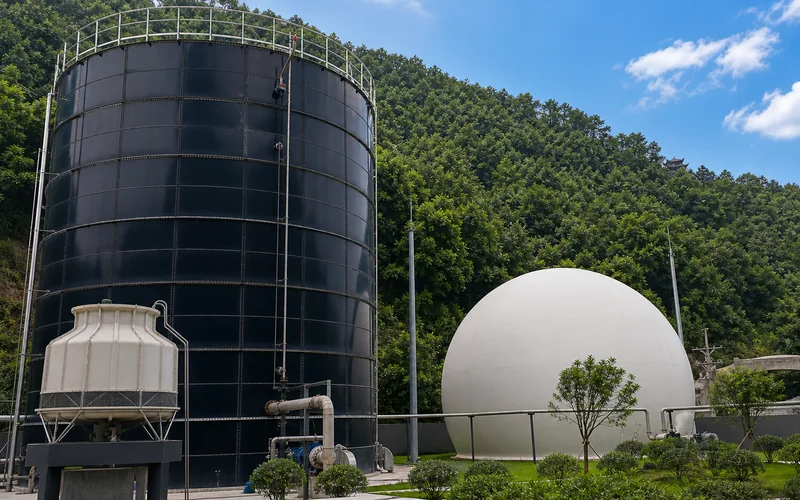
Biogas holders must be sized from process assumptions
A double membrane biogas holder is not just a flexible roof. It is part of the anaerobic digestion and gas-handling system. The RFQ should define gas production, gas composition, pressure range, operating temperature, H2S risk, condensate management, and safety devices before a supplier recommends size or membrane details.
For many projects, the holder works with biogas storage tanks, anaerobic digesters, gas treatment, CHP units, boilers, or flare systems. The interfaces between tank, membrane, blower, pressure control, piping, relief devices, and instruments need to be clear before purchase.
This guide expands the original article into a buyer-side checklist for agricultural, food processing, sludge, and industrial biogas projects.
Double Membrane Holder RFQ Data
| RFQ Item | Engineering Use |
|---|---|
| Gas production and buffer volume | Daily gas volume, peak production, gas utilization schedule, and desired buffer time guide holder volume. |
| Pressure range | Normal operating pressure, maximum pressure, relief settings, and downstream equipment requirements affect membrane and control selection. |
| Gas composition | Methane, carbon dioxide, H2S, moisture, and trace gases affect safety, corrosion, and gas treatment interface. |
| Site conditions | Wind, temperature, UV exposure, snow if applicable, and seismic context influence structural and membrane review. |
| Safety and instrumentation | Relief devices, pressure monitoring, flame arresters where required, condensate drainage, and gas detection should be coordinated with the process designer. |
Separate tank supply from process guarantees
A tank or membrane supplier can define geometry, materials, pressure basis, accessories, and installation scope. Biological performance, gas yield, feedstock conversion, and process stability should be handled by the process designer or EPC contractor.
The RFQ should clearly state the boundary between holder supply, tank supply, gas treatment, blowers, controls, electrical integration, and commissioning. Ambiguous scope causes disputes during startup.
Gas-side risk review
Biogas usually contains methane and carbon dioxide and may include hydrogen sulfide and moisture. The buyer should provide expected gas composition and identify desulfurization, condensate drainage, pressure control, and safety requirements.
Membrane material, seals, fasteners, and appurtenances should be reviewed for site climate and gas exposure. The support structure and tank interface should also be coordinated with wind and operating pressure assumptions.
Documents to request before order
Ask for membrane material data, pressure basis, accessory list, installation guide, inspection procedure, spare parts list, and interface drawings. If the holder is installed above a tank, tank roof opening, clamp detail, and maintenance access should be included.
For export projects, also confirm packing, unloading, lifting, site storage, local installation tools, and remote technical support. Membranes can be damaged by poor handling even when the design is correct.
Biogas holders must be sized from process assumptions: Codes and Evidence
For general process background, EPA AgSTAR provides non-commercial anaerobic digestion and biogas resources through EPA AgSTAR. Use process data from the project designer when preparing the final RFQ.
Procurement Review for double membrane biogas holder supply
Before placing an order, the buyer should ask the supplier to confirm the engineering assumptions, included accessories, excluded items, inspection records, packing method, installation boundary, and document submission schedule for double membrane biogas holder supply. This prevents a low headline price from hiding missing nozzles, platforms, coating work, supervision, or approval documents.
The commercial comparison should separate the tank shell, roof or cover, internal and external protection, appurtenances, freight, installation support, spare parts, and commissioning documents. If two quotations do not use the same scope, they should not be compared as if they describe the same tank package.
Buyers should also ask how design changes are controlled after approval drawings are released. A late nozzle change, platform revision, coating change, or site-load update can affect fabrication, packing, delivery, and installation. A professional supplier should explain how revisions are reviewed, priced, documented, and reflected in the final drawing package.
The final order file should keep approved drawings, inspection records, packing lists, installation notes, and any agreed deviations together, so the site team can verify the delivered tank against the purchased scope.
For long-life storage assets, the order should also identify the recommended inspection interval, spare parts, repair materials, and contact route for technical support after commissioning.
This review should be completed before production release, when design corrections are still practical and inexpensive.
RFQ Preparation
Send feedstock type, gas production estimate, pressure range, gas composition, site loads, safety devices, tank interface, and installation boundary for double membrane biogas holder pricing.