
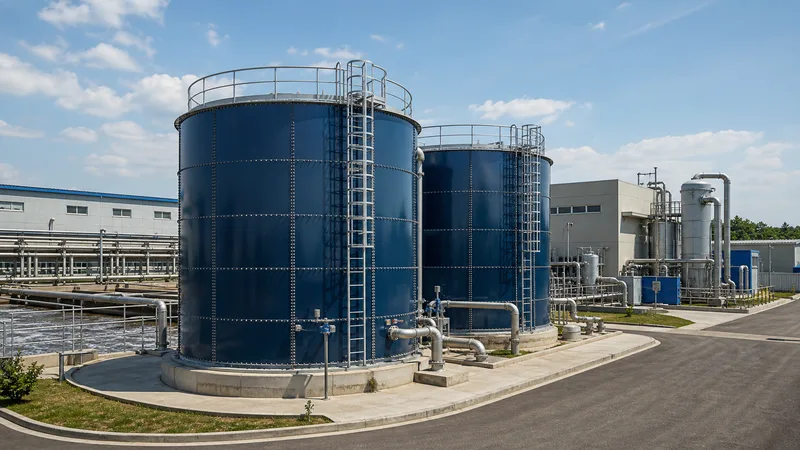
Food wastewater tanks need process data before product selection
Food and beverage wastewater can include sugars, starches, proteins, fats, oils, grease, suspended solids, cleaning chemicals, and temperature variation. A tank inquiry that only gives volume will not let a supplier evaluate coating suitability, cleaning access, nozzle layout, or maintenance risk.
Epoxy coated steel tanks are often considered where the buyer needs exportable panels, controlled factory coating, and practical field assembly. The supplier should still review wastewater data before recommending fusion bonded epoxy tanks, stainless steel, glass-fused-to-steel, or another storage system.
This article is written for buyers preparing RFQs for equalization tanks, buffer tanks, high-strength wastewater storage, and treatment plant upgrades. It should be used together with the wastewater treatment application page rather than as a generic catalog description.
Food Processing Wastewater RFQ Checklist
| RFQ Data | Why It Changes the Tank Design |
|---|---|
| Flow and equalization volume | Daily flow, peak flow, retention time, and treatment plant downtime influence capacity and operating level. |
| Wastewater strength | COD, BOD, suspended solids, fats/oils/grease, pH range, temperature, and cleaning chemicals affect coating and accessory review. |
| Solids and cleaning plan | High solids may require drains, manways, mixers, sloped floor details, washdown access, or planned shutdown intervals. |
| Odor and roof requirements | Closed roofs, vents, odor-control connections, or gas handling may be needed depending on the site and local regulation. |
| Inspection documents | Surface preparation, coating thickness, holiday testing, packing protection, and site touch-up procedures should be identified before order. |
Why coating review matters more than tank volume
A tank that stores process water is different from a tank that stores aggressive wastewater with cleaning chemical carryover. The coating system should be reviewed against temperature, pH, chloride risk, fats, solids, and cleaning method. Buyers should ask for a coating basis and inspection record, not only a coating name.
Food plants also need to consider hygiene and maintenance. Even if the tank is outside the sanitary production area, wastewater storage can create odor, corrosion, and cleaning issues if manways, vents, drains, and access points are not planned correctly.
Nozzle and accessory planning
A practical RFQ should include inlet, outlet, overflow, drain, sample point, level instrument, mixer, vent, roof access, and ladder requirements. Late nozzle changes after coated panels are fabricated can delay shipment and increase field modification risk.
For international projects, the buyer should clarify whether the supplier provides only tank materials, installation supervision, or full installation. Packing method, spare bolts, gasket handling, and local lifting equipment should be discussed before shipment.
Total project risk, not only tank price
The lowest tank price may exclude coating inspection, accessories, freight protection, field touch-up materials, or installation guidance. When wastewater is aggressive or the plant has limited shutdown windows, these omissions can cost more than the initial savings.
Compare supplier offers by design basis, coating inspection, accessory completeness, project references, document quality, and support for site installation. A stronger quotation should make assumptions visible and reduce change orders during commissioning.
Food wastewater tanks need process data before product selection: Codes and Evidence
For regulatory context in the United States, EPA NPDES resources explain wastewater discharge permitting through the EPA NPDES program. International projects should follow the equivalent local discharge and environmental authority requirements.
Procurement Review for food processing wastewater storage
Before placing an order, the buyer should ask the supplier to confirm the engineering assumptions, included accessories, excluded items, inspection records, packing method, installation boundary, and document submission schedule for food processing wastewater storage. This prevents a low headline price from hiding missing nozzles, platforms, coating work, supervision, or approval documents.
The commercial comparison should separate the tank shell, roof or cover, internal and external protection, appurtenances, freight, installation support, spare parts, and commissioning documents. If two quotations do not use the same scope, they should not be compared as if they describe the same tank package.
Buyers should also ask how design changes are controlled after approval drawings are released. A late nozzle change, platform revision, coating change, or site-load update can affect fabrication, packing, delivery, and installation. A professional supplier should explain how revisions are reviewed, priced, documented, and reflected in the final drawing package.
The final order file should keep approved drawings, inspection records, packing lists, installation notes, and any agreed deviations together, so the site team can verify the delivered tank against the purchased scope.
For long-life storage assets, the order should also identify the recommended inspection interval, spare parts, repair materials, and contact route for technical support after commissioning.
This review should be completed before production release, when design corrections are still practical and inexpensive.
RFQ Preparation
Send flow data, wastewater analysis, cleaning method, capacity target, roof and odor requirements, nozzles, inspection needs, and installation scope when requesting food processing wastewater tank pricing.