
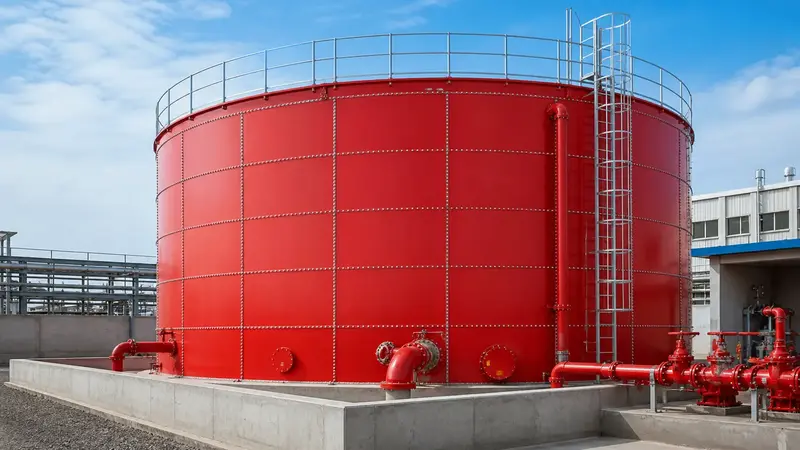
Fire water tanks are approval-driven project assets
Fire water storage is different from ordinary utility water storage because the tank is part of a protection system. Capacity, suction arrangement, refill, overflow, inspection access, freezing protection, and documents may be reviewed by the fire protection engineer, insurer, owner, or authority having jurisdiction.
Epoxy coated steel tanks can be reviewed for fire water duty where the water quality, site environment, coating system, and approval requirements are suitable. Buyers comparing fire water tanks should treat the RFQ as a system interface document, not a simple tank catalog request.
This guide expands the original checklist with more practical approval and site questions. It should be used with the RFQ data checklist before issuing a supplier inquiry.
Fire Water Tank RFQ Data
| RFQ Item | Reason for Review |
|---|---|
| Usable volume | Fire protection designs usually need usable water volume, not only nominal tank capacity. |
| Approval standard | State whether NFPA 22 or another local standard, insurer rule, or owner specification applies. |
| Suction and refill arrangement | Nozzle sizes, anti-vortex details where required, refill line, overflow, drain, and low-level controls must match the fire system. |
| Climate and site loads | Wind, seismic, snow, freezing risk, coastal exposure, and foundation interface affect design and accessories. |
| Inspection and maintenance access | Ladders, platforms, roof access, manways, internal inspection, and periodic testing should be planned before order. |
Usable capacity should be defined early
A common procurement mistake is requesting only nominal tank volume. The usable volume may be affected by freeboard, low-level limits, suction elevation, tank geometry, and operational reserve. These values should be reviewed by the fire protection designer before quotation is finalized.
The buyer should also identify whether the tank supplies sprinklers, hydrants, foam systems, process emergency water, or combined fire and service water. Combined duties need careful separation of operating volume and fire reserve.
Coating and water quality review
Fire water may remain stagnant for long periods. Water chemistry, microbial activity, temperature, cleaning method, and inspection interval can affect coating selection and maintenance. Buyers should ask the supplier to state the coating basis and inspection method.
For epoxy coated tanks, factory surface preparation, coating thickness, holiday testing, panel protection, and field touch-up instructions are important. These records help protect tank life after shipment and site assembly.
Documents that reduce approval risk
The supplier should define whether preliminary drawings, design basis, material information, installation instructions, inspection documents, and hydrotest procedures are included. Approval documents should be requested before production, not after panels arrive on site.
For export projects, the quotation should state whether installation supervision, remote support, spare parts, and translated documents are available. These items can affect commissioning speed and owner acceptance.
Fire water tanks are approval-driven project assets: Codes and Evidence
NFPA 22 is a key reference for private fire protection water tanks. Check the official NFPA 22 standard page for scope and edition information, then follow the authority having jurisdiction.
Procurement Review for fire water tank supply
Before placing an order, the buyer should ask the supplier to confirm the engineering assumptions, included accessories, excluded items, inspection records, packing method, installation boundary, and document submission schedule for fire water tank supply. This prevents a low headline price from hiding missing nozzles, platforms, coating work, supervision, or approval documents.
The commercial comparison should separate the tank shell, roof or cover, internal and external protection, appurtenances, freight, installation support, spare parts, and commissioning documents. If two quotations do not use the same scope, they should not be compared as if they describe the same tank package.
Buyers should also ask how design changes are controlled after approval drawings are released. A late nozzle change, platform revision, coating change, or site-load update can affect fabrication, packing, delivery, and installation. A professional supplier should explain how revisions are reviewed, priced, documented, and reflected in the final drawing package.
The final order file should keep approved drawings, inspection records, packing lists, installation notes, and any agreed deviations together, so the site team can verify the delivered tank against the purchased scope.
For long-life storage assets, the order should also identify the recommended inspection interval, spare parts, repair materials, and contact route for technical support after commissioning.
This review should be completed before production release, when design corrections are still practical and inexpensive.
RFQ Preparation
Send usable fire water volume, applicable standard, project location, site loads, tank geometry, nozzles, approval documents, and installation scope when requesting fire water tank pricing.