
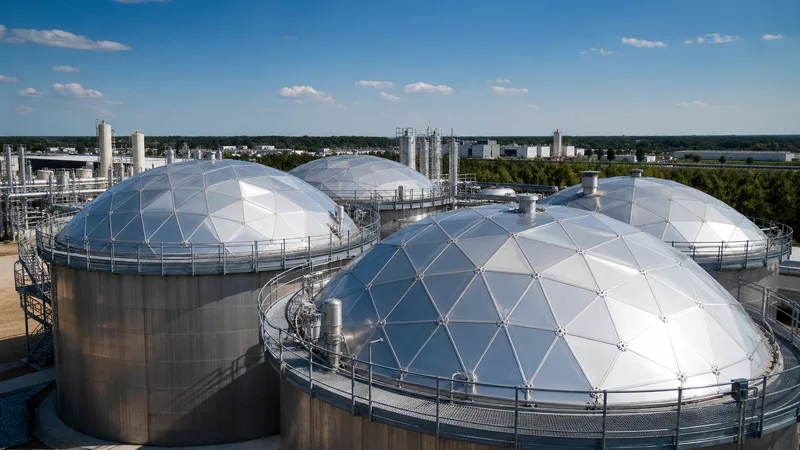
A dome roof must match the tank interface and stored medium
Aluminum dome roofs are commonly reviewed for water tanks, wastewater tanks, stainless steel silos, and bulk storage tanks because they can provide a lightweight corrosion-resistant cover. They should not be treated as a generic accessory. The roof has to match the tank diameter, shell top detail, stored medium, load basis, venting demand, and maintenance access.
For new tank packages, roof and shell design can be coordinated from the beginning. For retrofits, buyers should provide existing drawings, tank photos, diameter checks, top ring condition, and previous roof attachment details before requesting a final price for aluminum dome roofs.
This guide helps buyers understand what should be specified before comparing roof quotations. It complements the site’s roof selection guide and tank design resources.
Aluminum Dome Roof RFQ Data
| RFQ Item | Technical Reason |
|---|---|
| Tank diameter and top detail | The roof supplier needs inside diameter, shell roundness, top angle, ring beam, and attachment details. |
| Load basis | Wind, snow, seismic, live load, dead load, and local code requirements should be stated before quotation. |
| Stored material | Drinking water, wastewater, chemicals, grain, or bulk material affects venting, seals, condensation, and access requirements. |
| Retrofit condition | Photos, corrosion status, previous roof attachment, deformation, and available drawings reduce design uncertainty. |
| Accessories | Hatches, vents, handrails, platforms, skylights, nozzles, odor-control connections, and safety access must be included or excluded clearly. |
New-build and retrofit projects need different reviews
In a new-build tank, the roof can be designed together with the tank shell, ladder, platform, nozzle layout, and installation sequence. That coordination reduces field drilling, late accessory changes, and installation delays.
Retrofit work is more sensitive. Existing tanks may be out of round, corroded, modified, or missing accurate drawings. The buyer should not expect a responsible supplier to finalize the roof price without enough evidence of the tank top condition.
Venting and condensation are not minor details
A roof quotation should define venting assumptions. Drinking water tanks, wastewater tanks, chemical vapor tanks, and grain silos all have different requirements for air exchange, condensation control, odor, dust, and maintenance access.
If the roof is intended to reduce contamination or weather exposure, the buyer should also define seals, access hatch type, screens, overflow or emergency venting, and inspection route. These details affect both performance and approval.
How to compare roof suppliers
Compare quotations by load basis, material specification, accessory list, interface assumptions, installation method, warranty boundary, and document package. A cheaper roof offer may simply exclude hatches, vents, platforms, or engineering review.
For large spans or harsh climates, ask whether calculations, drawings, or third-party review are included. The roof supplier should make design assumptions visible before order confirmation.
A dome roof must match the tank interface and stored medium: Codes and Evidence
Water-storage roof projects may reference AWWA standards depending on the owner specification. Use the official AWWA standards store to identify the relevant standard and edition.
For welded oil storage tanks, API standards can provide roof-design context in the applicable standard and annexes. Confirm the standard through the API standards portal and the project engineer.
Procurement Review for aluminum dome roof supply
Before placing an order, the buyer should ask the supplier to confirm the engineering assumptions, included accessories, excluded items, inspection records, packing method, installation boundary, and document submission schedule for aluminum dome roof supply. This prevents a low headline price from hiding missing nozzles, platforms, coating work, supervision, or approval documents.
The commercial comparison should separate the tank shell, roof or cover, internal and external protection, appurtenances, freight, installation support, spare parts, and commissioning documents. If two quotations do not use the same scope, they should not be compared as if they describe the same tank package.
Buyers should also ask how design changes are controlled after approval drawings are released. A late nozzle change, platform revision, coating change, or site-load update can affect fabrication, packing, delivery, and installation. A professional supplier should explain how revisions are reviewed, priced, documented, and reflected in the final drawing package.
The final order file should keep approved drawings, inspection records, packing lists, installation notes, and any agreed deviations together, so the site team can verify the delivered tank against the purchased scope.
For long-life storage assets, the order should also identify the recommended inspection interval, spare parts, repair materials, and contact route for technical support after commissioning.
This review should be completed before production release, when design corrections are still practical and inexpensive.
RFQ Preparation
Send tank diameter, tank drawings, top ring photos, stored medium, load basis, accessory list, and installation scope when requesting aluminum dome roof pricing.